Why adopt accounting software? 8 essential reasons
Optimise your SME’s financial management with Sequence: automation, accuracy and compliance. Find out more.
For small and medium-sized enterprises (SMEs), accounting is not just a legal obligation. It is an essential strategic tool for decision-making, financial planning and performance monitoring. However, managing accounts can quickly become time-consuming and require significant resources that an SME may not be ready to put in place. This is where accounting software comes in. Accounting software is a system that helps businesses manage their cash flow, track their turnover and expenses, automate invoicing and payments, and remain compliant with tax regulations. With an intuitive dashboard containing the company’s key financial information, the accounting tool enables SME leaders to make informed decisions and plan for the future with confidence. In this article, discover 8 undeniable reasons to introduce accounting software into your SME.
1. Automate your accounting
Managing your accounts manually is about as much fun as counting blades of grass in an endless field. You spend hours sorting piles of invoices, entering figures into endless Excel spreadsheets and chasing expense receipts. Does that sound familiar? If so, it is time to consider automating your accounting as your new ally.
Automating your accounting is like having an accounting superhero on your team. The software handles repetitive and tedious tasks so you can focus on what really matters: growing your company’s turnover. But how exactly does this type of tool simplify an SME’s accounting? It is simple.
First, take invoicing. Instead of creating each invoice manually, accounting software lets you generate an invoice in a few seconds and send it with one click. And that is not all. The tool also follows up with late-paying customers without you having to lift a finger. See? You have just saved hours of work and reduced the risk of human error.
Next, tracking expenses. With automation, say goodbye to hours spent poring over your bank statements. The software does the heavy lifting for you, automatically categorising expenses and even reconciling bank transactions: all you need to do is confirm what the artificial intelligence has detected. Imagine: a clear overview of your cash flow, accessible with a single click.
2. Optimise your processes and reduce human error
Optimising processes and reducing human error are two challenges faced by all SMEs seeking efficiency. Accounting software provides a solution to these challenges. It ensures accurate calculations. Thanks to precise algorithms, these tools eliminate the risk of common errors that can occur during manual data entry, such as transposed digits or missed transactions. These common human errors can have significant consequences for financial analysis and decision-making.
With automation, every transaction is processed with the same rigour. It therefore provides reliability and peace of mind for the company’s decision-makers. Similarly, automation makes it possible to establish clear accounting processes that can easily be applied by company staff who are directly or indirectly involved in accounting. This makes the entire system more efficient and easier to monitor. This level of accuracy and efficiency leads to better resource management and significant optimisation of time and costs for the business.
3. Quickly visualise your company’s financial data
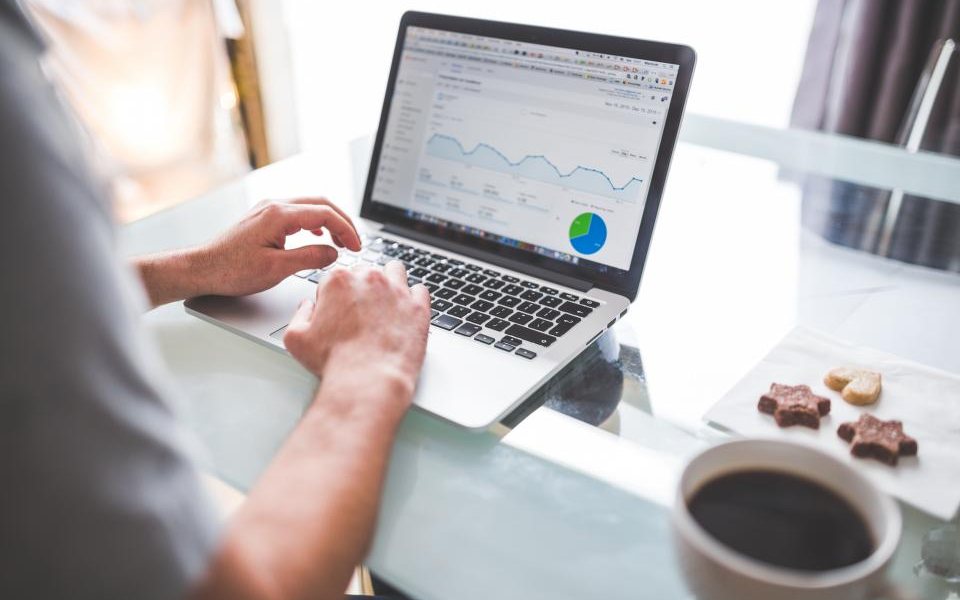
Would you like to see your company’s financial health at a glance, without having to dive into an ocean of figures and complex reports? That is exactly what an accounting tool enables through intuitive dashboards, such as graphs and charts.
These tools turn raw data into understandable information, allowing you to instantly understand your company’s performance and detect anomalies. Whether you are tracking changes in income and expenses or monitoring cash flow, these dashboards provide a clear overview.
Moreover, access to financial data updated in real time is an invaluable advantage. It allows you to react quickly based on your results. In short, graphs and dashboards are not just reporting tools. They are a cornerstone you can rely on to make strategic decisions and lead your business towards success.
An example of how a dashboard benefits a service company
Imagine a Geneva-based company offering cybersecurity solutions to Swiss businesses. Managing contracts, billable hours and project-related expenses is a daily challenge. Efficiency and accuracy in financial monitoring are essential to maintaining this SME’s profitability and customer satisfaction.
With accounting software such as Sequence, this company can, for example, produce detailed charts showing revenue by customer or project. Such charts help identify the customers or projects that contribute most to turnover and allocate resources more strategically.

Much more than an accounting tool: automate your SME’s administration
Another useful dashboard for this type of company would display hours worked per project compared with billable hours, highlighting discrepancies and allowing estimates to be adjusted for future contracts. These dashboards help optimise pricing and time management, two crucial elements in improving margins in a service business.
Of course, more traditional dashboards, such as those tracking expenses or turnover, are also relevant. Seeing the financial impact of business decisions in real time makes it possible to react quickly and adjust operations rapidly. This data-driven approach supports strategic decision-making and leads the company towards greater growth and better profitability.
4. Ensure tax compliance with ease
In Switzerland, businesses have specific obligations: filing VAT returns, managing social security contributions for employees, and filing profit and capital tax returns. For an SME, navigating tax regulations while staying focused on its core business can be difficult. This is where accounting software comes in.
Updates to tax regulations
Accounting software is regularly updated to incorporate the latest changes to Swiss tax laws. This feature ensures that your company always applies the correct VAT rates and meets the latest tax reporting requirements, helping you avoid errors.
Automating the preparation of tax returns
The VAT return process, along with the preparation of profit and capital tax returns, is generally automated by the software. It compiles the relevant financial data, calculates the tax due and generates the forms required for your return. This automation not only saves hours of manual work but also ensures the accuracy of the returns.
Preparing for tax inspections
When facing an audit by the Federal Tax Administration (FTA) or the Cantonal Tax Administration, your company must demonstrate impeccable document organisation and transaction traceability. An accounting tool ensures this organisation for you. Every transaction is documented and can be supported by the appropriate accounting records, stored securely within the system. This organisation greatly facilitates reviews by the tax authorities and demonstrates the transparency of your accounting management.
Organised document storage
Accounting software such as Sequence offers a digital storage solution that not only meets Swiss tax document retention requirements but also makes these documents easier to access when needed. This includes invoices, bank statements, contracts and payslips, all stored securely and in compliance with data protection standards.
5. Secure your financial data
Financial data is not just a set of figures on a balance sheet. It represents your company’s overall health, cash flow, investments, income and expenses. A leak of this data can have damaging consequences for the business. Securing your financial data is not an option but a necessity. Here are some security features generally included in accounting software (make sure they are present when choosing your software).
Automated backups
The first line of defence against data loss is an effective backup system. Today’s accounting software includes automatic, regular and encrypted backups of your data, stored in secure data centres. In the event of a disaster, hardware failure or cyberattack, you can quickly restore your data, minimising disruption to your business.
Data encryption
Encryption is essential to protect your financial data during transmission and storage. Accounting software often uses state-of-the-art encryption, such as 256-bit AES (Advanced Encryption Standard), to secure data against spying and unauthorised access. Whether your data is being transferred to the cloud or stored on servers, encryption ensures that it remains readable only by authorised individuals.
Strong authentication
To control access to your financial data, tools generally include two-factor authentication (2FA), where users must provide two forms of identification before accessing the system. This measure significantly reduces the risk of unauthorised access, even if one of your passwords is compromised.
Access rights management
Precise management of access rights ensures that only authorised individuals can view or modify financial data. The software allows specific access levels to be configured for different users, ensuring that everyone can access only the information necessary for their role.
6. Improve collaboration with your accountant
Accounting software facilitates real-time collaboration between internal teams and external accountants. Thanks to cloud-based platforms, financial data is accessible at any time and from any device with an internet connection. This instant accessibility eliminates the delays and misunderstandings that can arise when exchanging paper documents or emails. The accountant can therefore review and validate the accounts quickly, at any time.
Remote access and secure data sharing
One of the greatest advantages of today’s accounting software is secure remote access to financial data. Whether you are in the office, on the move or working from home, you and your accountant can view and manage the company’s finances without compromising data security. With a tool such as Sequence, you can even access your accounting tool from your smartphone.
As mentioned in the previous paragraph, accounting tools use advanced security measures, such as data encryption, multi-factor authentication and strict security protocols, to protect information against unauthorised access. This approach ensures that financial data is shared with your accountant in a secure environment, preserving the confidentiality and integrity of your company’s information.
In addition, these systems provide full traceability of access to and changes made to financial data, offering complete transparency about who has viewed or modified information and when. This feature is crucial not only for security but also for maintaining smooth, trust-based collaboration between businesses and their financial advisers.
7. An affordable price for an SME
There is no doubt: the cost of accounting software is negligible compared with the time businesses save. The initial time spent setting up such a tool is quickly offset by the productivity gains and efficiency improvements it delivers. By automating repetitive and time-consuming accounting tasks, such as data entry, generating financial reports, or managing invoices and payments, businesses free up valuable working hours. These hours are then reinvested in activities with higher added value.
On another level, the software pays for itself by reducing human error in the company’s accounting management. With its automated system and synchronisations, the tool limits errors. This saves additional time and avoids fines resulting from inaccurate returns.
8. Manage human resources, payroll, leave and absences
Who said an accounting tool had to be limited to accounting? Some ERP systems also include features essential to the smooth running of an SME. You can therefore manage your human resources using a simple tool, in the same place as your accounting. Without compromising on features or the quality of the tool.
Much more than an accounting tool: automate your SME’s administration.
Imagine being able to send payslips in less than 10 minutes, manage absences and paid leave for your employees in a few clicks, and customise pay policies to suit your company’s specific needs. As well as simplifying payroll management, such a tool automates processes and adapts to each employee’s circumstances, including cantonal deductions and withholding tax.
With 24/7 access to important documents for employees, simplified absence management and the ability to allocate human resources to projects efficiently, introducing accounting software becomes an obvious choice for SMEs looking to optimise their internal management and focus on growth.
In brief: why introduce accounting software?
In conclusion, adopting accounting software offers a host of key benefits for any SME looking to optimise its financial management. Valuable time savings, a significant reduction in human error, instant and clear visualisation of financial data, simpler tax compliance, stronger financial data security and improved collaboration with your accountant: all these benefits are centralised in a single tool. In addition, advanced features such as automatic invoice sending and payment reminders help accelerate cash inflows, which are essential to the company’s financial health.
The accounting tool proves to be not only a strategic investment in simplifying accounting processes but also a driver of growth, allowing businesses to focus on their core activities. Choose an accounting tool that meets the needs of a growing SME, with all the features necessary to manage your business.
Less time on admin, more on your business.